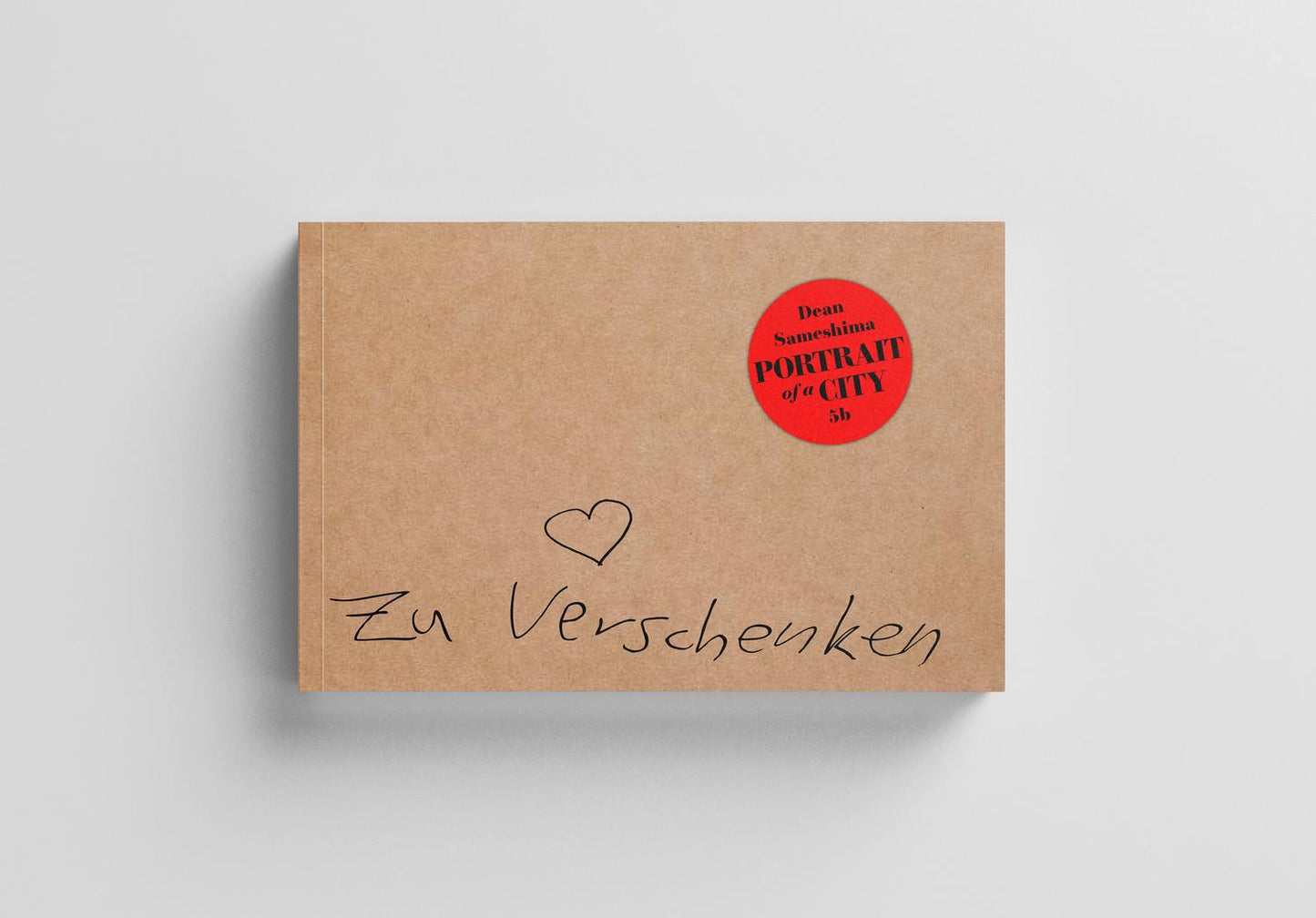
Dean Sameshima – Portrait of a City
Dean Sameshima – Portrait of a City
Couldn't load pickup availability
Freud says that: “in reality, wherever archaic modes of thought have predominated or persist – in the ancient civilisations, in myths, fairy tales and superstitions, in unconscious thinking, in dreams and in neuroses – money is brought into the most intimate relationship with dirt.” The gift is a symbolic bundle of opposing forces – extending towards and holding onto, dirty and valuable, pleasure and sacrifice. Sameshima illuminates this unconscious connection, embodied as much in the silk scarf and VHS tapes as the used condom: “here, [mommy/daddy], this is for you”.
— excerpt from ‘Givers’ by Lina Martin-Chan
'Portrait of a City' braids together two projects by artist Dean Sameshima—zu verschenken (2020–ongoing) and Still Life (2022–23)—in a composite book-work which constitutes a poignant meditation on the city of Berlin and it’s changing cultural landscape.
The images in ‘Portrait of a City’ address both public and queer spaces through the lens of the everyday, bridging notions of community, connection, desire and consumption. While studying under Allan Sekula at CalArts in the early ‘90s, Sameshima photographed the exteriors of queer sex clubs and bathhouses around Silverlake, Los Angeles, as well as notorious cruising areas nearby. Decdes later, in Still Life the artist depicts waste and intimate detritous left inside Berlin's local Sex Kinos, spaces now also in jeopardy. While the subject matter may differ, zu verschenken nevertheless still concerns the intersection of public and private, and finds Sameshima cruising the quotidian, surveying a civic identity in flux.
Additionally, the publication features a newly commissioned text by Berlin-based writer and programmer Lina Martin-Chan. Beyond tracing the genesis of each project and their place within Sameshima’s broader oeuvre, in her text Martin-Chan also posits a reading of the two projects as gifts in the Freudian sense – choosing between bodily pleasure and object love, and how we learn about exchange as infants.
Share